

The Bottom Line
For most women, the best day to start testing is 17 days before your next expected period. If you have a 28-day cycle, this usually means starting on Day 11. We recommend this timing because it gives you a few days to see your baseline levels before your hormones begin to rise, helping you identify your peak with more confidence.
Why the "Start Day" Matters
Finding the right start day is crucial for seeing the full picture of your cycle. Starting testing too late might mean missing the beginning of your LH (Luteinizing Hormone – the chemical messenger that triggers ovulation) surge. When you catch the surge from the very beginning, you gain a clearer picture of your progression. This allows you to time intimacy to your fertile window if you are trying to conceive.
The Simple Formula: Shortest Cycle Minus 17
Cycles can vary from month to month. To ensure you are covered, look at your cycle history from the last six months.
- Find your shortest cycle. (Example: 26 days).
- Subtract 17. (26 - 17 = 9).
- Start testing on Day 9 of your cycle. (Day 1 is the first day of full flow).
We suggest using your shortest cycle for this calculation because ovulation can happen earlier than expected. By calculating based on your earliest potential window, you ensure you are ready even if your body decides to speed things up this month.
Understanding the "Why" Behind the Math
You might wonder why we subtract 17 when ovulation often happens 14 days before a period.
We suggest a buffer of a few extra days because every body is unique. The "luteal phase" (the time between ovulation and your period) is usually consistent, but the "follicular phase" (the time before ovulation) can change based on stress, travel, or illness. Starting early allows you to observe your baseline hormone levels. Seeing a stark white or faint line on a test strip is actually helpful data because it provides a clear contrast when the test line eventually darkens.
What If My Cycles Are Irregular?
If your cycle length varies significantly (by more than a few days each month), determining a start date can feel tricky.
- Strategy A: Use the shortest cycle in your recent history as your benchmark.
- Strategy B: If your cycles are very long or unpredictable, start testing shortly after your period ends.
Frequent testing ensures that even if ovulation occurs unexpectedly early or late, you are likely to catch it.
Timing Your Daily Test
Unlike pregnancy tests which often require first morning urine, LH (Luteinizing Hormone – the ovulation signal) is typically synthesized in the body early in the morning and may not appear in your urine until later.
- Best Time: Between 10:00 AM and 8:00 PM.
- Liquid Intake: Try to limit your liquids for about two hours before testing. This helps concentrate the urine, making the result easier to read.
Testing at roughly the same time every day helps you compare apples to apples. If you notice your test line getting darker, you might consider testing twice a day (once in the morning and once in the evening) to catch the exact peak.
A Note on Canadian Availability
We know that consistent testing requires a steady supply of strips. We are proud to be a Canadian option that keeps shipping quick and local, so you always have what you need on hand without long waits at the border.
Summary Checklist
- Calculate: Shortest cycle length minus 17.
- Hydrate Smart: Reduce fluids 2 hours before testing.
- Test: Dip your strip in the afternoon or early evening.
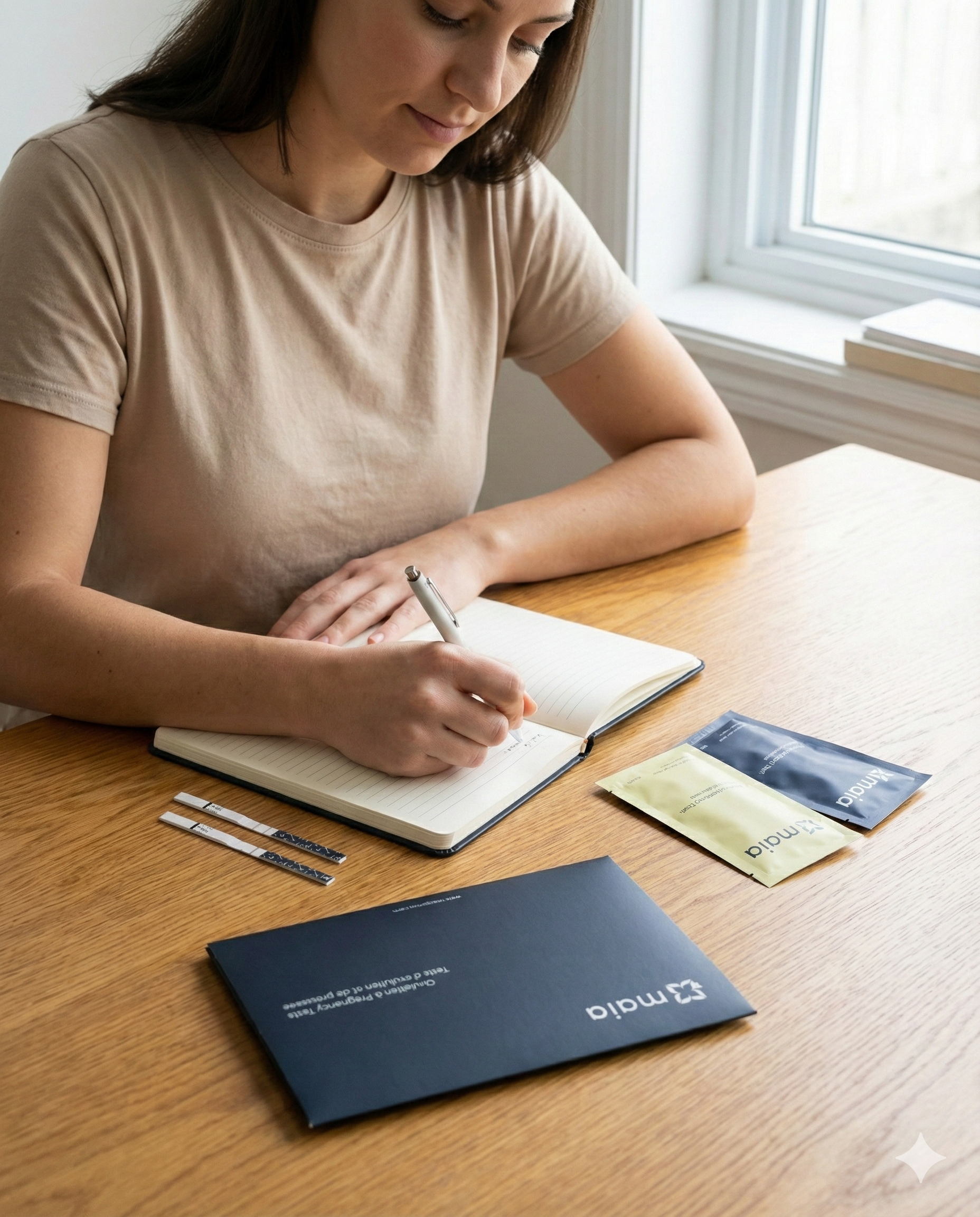
- Record: Tape your strip in a notebook or snap a photo to track the progression.
Frequently Asked Questions
Q: Can I test right after my period ends?
Yes, you certainly can. This is a safe strategy if you have short cycles (less than 25 days) because ovulation can happen quite early in those cases.
Q: What if I miss a day of testing?
If you miss a day, simply test as soon as you can the next day. We recommend testing twice that day if you think you might be close to your window, because the LH (Luteinizing Hormone) surge can be short.
Q: Do I need to test after I see a positive result?
Once you see your peak (the test line is as dark or darker than the control), ovulation usually follows within 24 to 36 hours. You can stop testing for this cycle, or continue for one more day to confirm the surge is going down. This confirms the peak has passed.

Leave a comment
This site is protected by hCaptcha and the hCaptcha Privacy Policy and Terms of Service apply.